

Mechanical PIN Code Locks NZ: Commercial Door Guide
Essential Security Supplies
Mechanical PIN code locks provide straightforward access to offices, storerooms, workshops and restricted commercial areas without electrical wiring, batteries or network connectivity. For New Zealand security installers and property managers, a mechanical keypad can offer a practical alternative to issuing physical keys when a shared code is acceptable. However, the suitability of any lock depends on the door, the required security level, emergency egress, traffic and how access codes will be managed.
1. How Do Mechanical PIN Code Locks Work?
A mechanical PIN code lock uses physical push-buttons connected to a mechanical locking mechanism. Entering the correct combination enables the handle or knob to operate the latch. A purely mechanical model requires no batteries, power supply, network or firmware. This makes it useful for selected standalone openings where simplicity and low ongoing electrical maintenance are priorities.
The term digital lock can be misleading: a mechanical digital lock may simply mean numbered push-buttons. An electronic keypad lock instead uses electronic circuitry to recognise credentials and operate a locking device. Depending on its design, an electronic system may provide individual user codes, access schedules, audit records or remote management. Those features should never be assumed for a conventional mechanical combination lock.
2. Where Are Mechanical PIN Code Locks Suitable?
Office storerooms and supply cupboards
A mechanical keypad can make sense where multiple authorised staff members access the same storeroom and where detailed user-level records are unnecessary. The benefit is fewer keys to distribute, collect and replace. The trade-off is that everyone with the combination can generally enter until the combination changes.
Workshops, maintenance rooms and staff-only areas
Selected internal workshop and staff-only doors can benefit from keyless access, especially where staff frequently carry equipment. Check the intended operating cycle, physical robustness of the lock and whether the door requires specialised latching or escape hardware. A light-duty internal product should not be assumed suitable for a heavily used external entrance.
Utility and service cupboards
For selected service spaces, a simple code may be sufficient. However, do not install a lock in a way that interferes with emergency access, essential maintenance, regulated access requirements or required escape routes. These conditions must be assessed for the actual project.
Mechanical PIN locks are generally a poor substitute for electronic access control where an organisation needs individual permissions, instant credential revocation, central management, door monitoring or an audit trail.
3. Comparing Mechanical PIN Code Lock Options
The mechanical PIN code locks collection at Essential Security Supplies provides a starting point for identifying the right hardware. Two relevant products are the Lockwood 530DX and Schlage SRL32029. Installers should confirm the currently supplied variant and current manufacturer instructions before final selection.
Lockwood 530DX Mechanical Digital Tubular Latch Lock
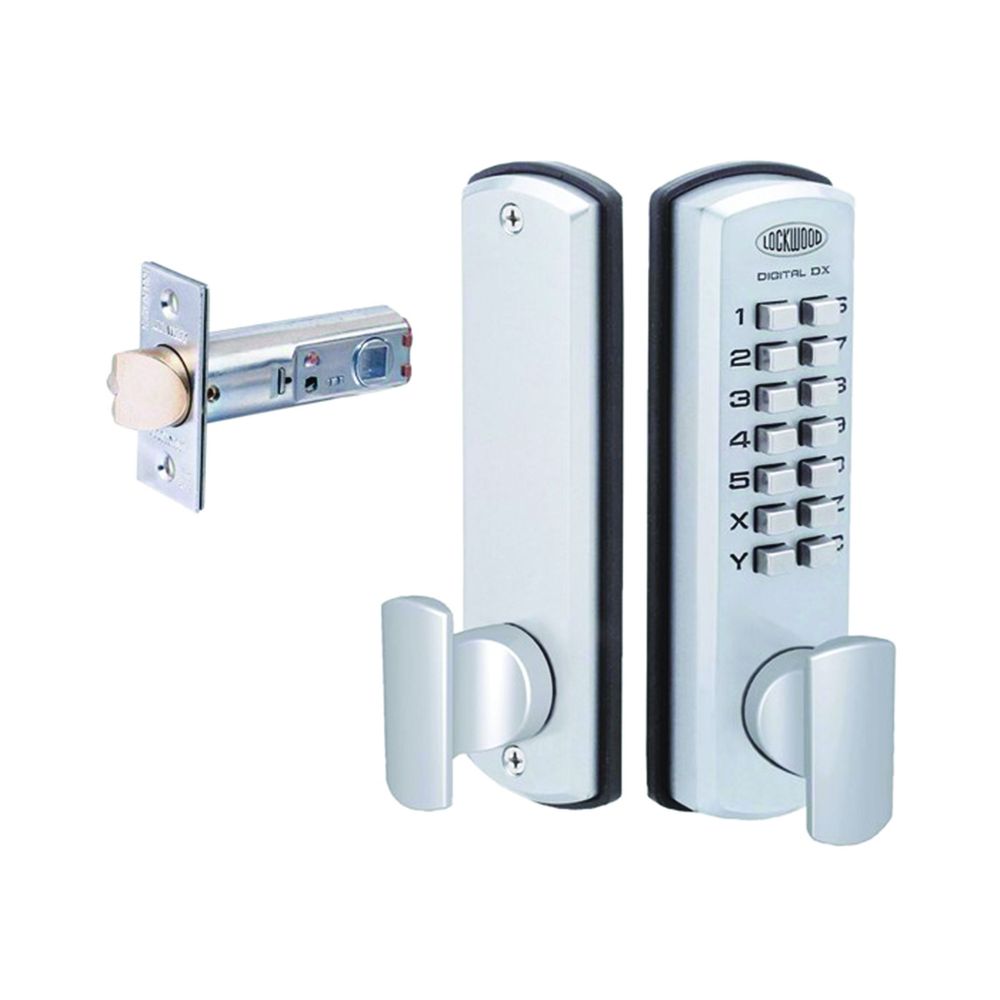
The Lockwood 530DX is a mechanical digital tubular latch solution for suitable door applications. Its listed characteristics include a 60 mm tubular latch backset, a specified 35 to 45 mm door thickness range, non-handed configuration and a changeable combination. Confirm exact code arrangement, supplied furniture and any fire-door evidence against the latest manufacturer documentation and the installed door assembly.
Schlage SRL32029 Digital Mechanical Lock
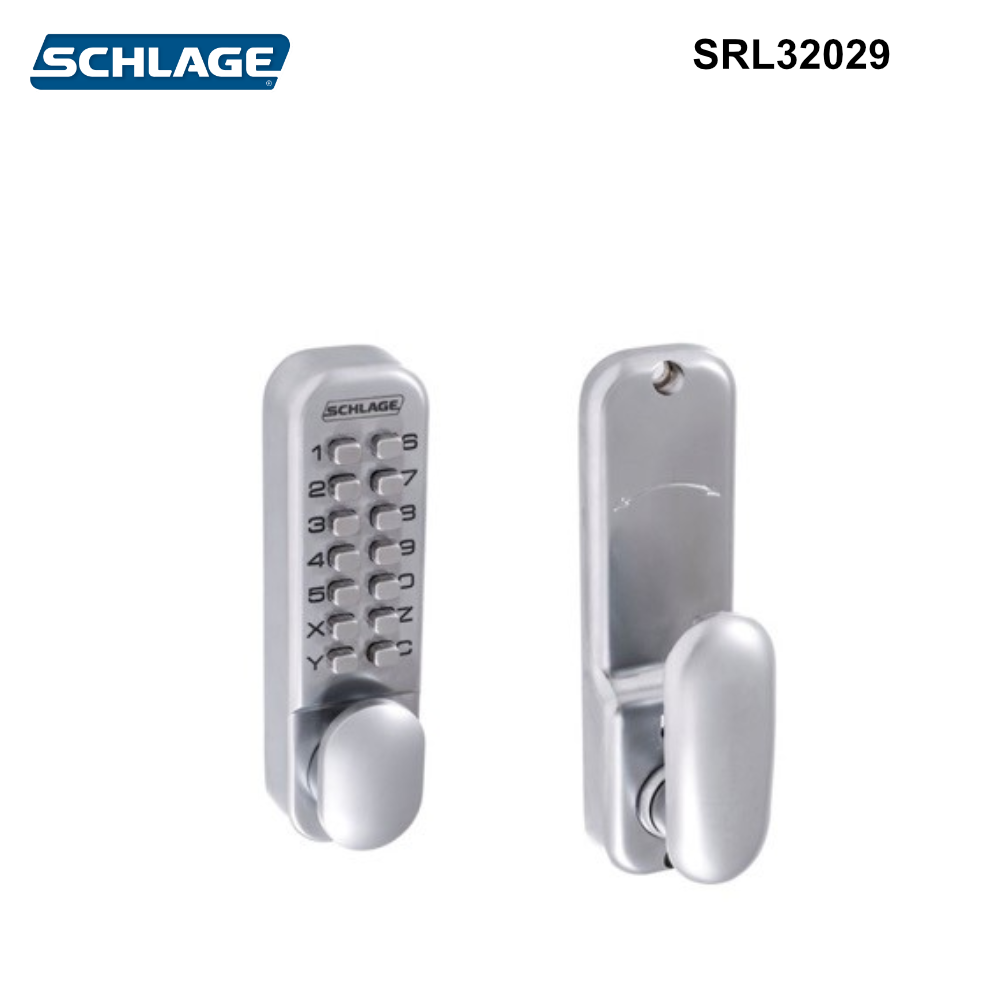
The Schlage SRL32029 is another mechanical keypad option. The referenced product information describes a 60 mm backset, a 32 to 50 mm door thickness range and light-duty internal-use considerations. Its single-active-code arrangement must not be confused with an electronic access control system supporting individually managed users.
For either option, the published specifications are a starting point rather than a substitute for inspecting the actual opening. Confirm door thickness, latch and strike preparation, operating furniture, installation clearances and frequency of use before ordering.
4. Installation Requirements for NZ Commercial Doors
Measure door thickness, backset and existing preparations
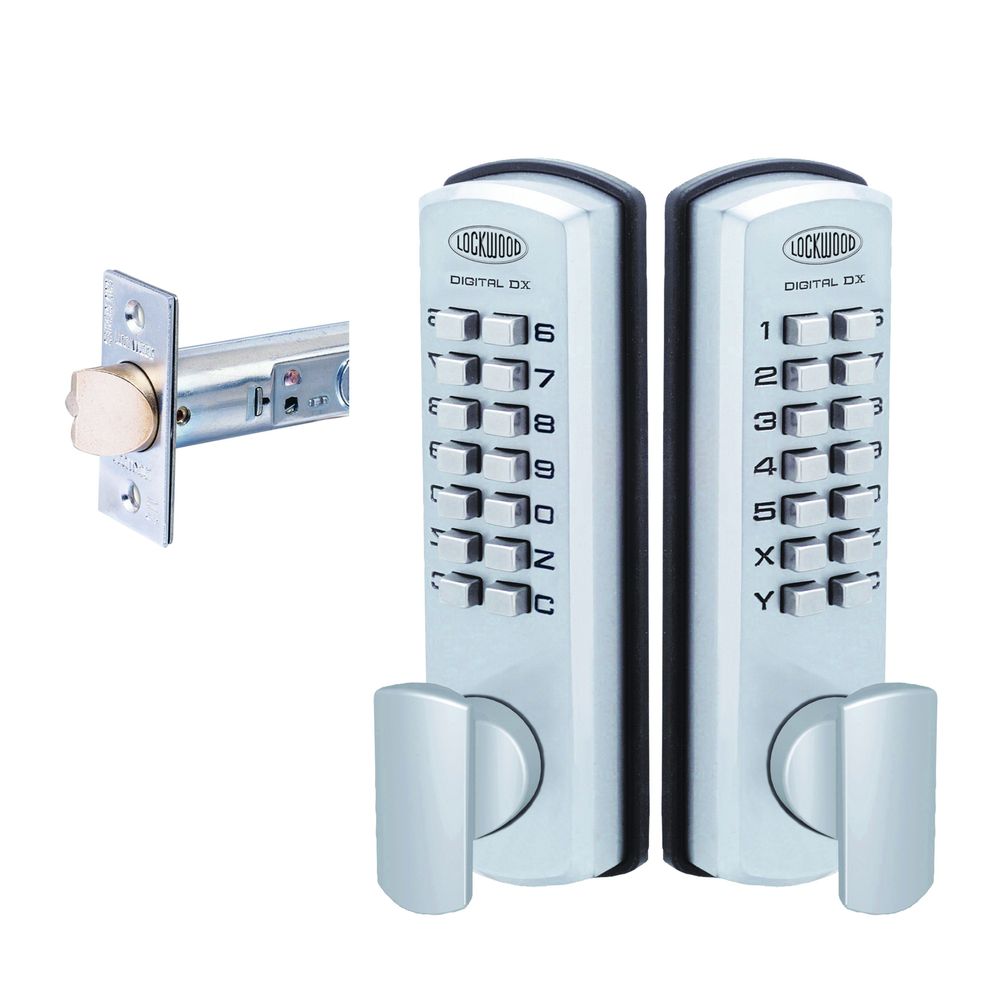
Measure the backset from the door edge to the centre of the operating spindle or lock mechanism, as appropriate to the manufacturer's template. Check door thickness, the existing bore and fixing locations, edge clearances and strike position. Replacing a keyed set may leave holes that a new keypad escutcheon does not conceal. Follow the supplied template rather than assuming every 60 mm backset lock has identical drilling requirements.
Confirm handing and exit operation
Even for non-handed products, check the complete assembly and its behaviour on the installed door. Verify whether the door opens inward or outward, the position of operating furniture, whether the latch engages without excess force and how a person exits from the protected side.
Fire doors, escape routes and accessibility
Fire-rated doors and required escape routes need particular care. The complete hardware combination must be appropriate for the approved doorset and relevant project requirements. A fire-test statement for an individual lock does not automatically approve its use on every fire-rated door. The responsible design and compliance professionals should confirm compatibility before installation or modification. Consider applicable New Zealand Building Code fire safety and accessibility provisions.
Exposure and environmental conditions
A battery-free mechanical lock is not automatically weatherproof. Moisture, airborne contaminants and corrosion can affect moving parts. Check the manufacturer's stated environmental limitations before selecting hardware for an external or exposed location.
5. Mechanical PIN Locks Versus Electronic Access Control
Mechanical locks are often attractive because they operate independently of electrical infrastructure and software. In return, they generally provide less administration and visibility. A conventional shared code does not tell a facility manager which person entered, and changing that code may require re-briefing every authorised user.
Electronic access control can be more suitable where a site needs distinct user credentials, controlled schedules, records of access, remote administration or integration with alarms and monitored doors. Suitable systems may support those capabilities, but exact features depend on the controller, readers, credentials and software. Explore the broader access control range for projects that require a managed solution.
Choosing a mechanical keypad for one low-risk storeroom can be reasonable. Applying the same approach across a large facility with frequent personnel turnover may create an avoidable burden whenever a shared PIN needs replacement. Consider future expansion before committing to standalone hardware.
6. Combination Security and Routine Maintenance
Manage shared codes deliberately
Avoid obvious number patterns and combinations displayed or widely circulated in uncontrolled documents. Limit distribution to people who need access. Change the code following a suspected disclosure or relevant staff departure and record who is responsible for managing it. Follow the specific manufacturer procedure: mechanical code-change arrangements vary.
Understand accountability limits
A shared combination is not an individual identity credential. If a customer needs to establish who opened a door and when, specify a system designed to record per-user events instead of implying a mechanical lock can provide an audit trail.
Inspect the complete door assembly
Routine checks should cover loose fixings, keypad wear, latch alignment, strike condition and smooth exit operation. Inspect whether the door closes and latches without pushing or lifting it excessively. Follow the manufacturer's cleaning and lubrication instructions; unsuitable products may impair the mechanism.
7. Commissioning Checklist for Installers
Before handover, test the correct combination repeatedly, verify that incorrect combinations do not release the external latch, check inside exit operation, and confirm consistent closing and latching. If the model includes a hold-open function, test it according to its instructions and confirm it is appropriate for the door's purpose. Provide the customer with the manufacturer's code-change and maintenance instructions and document any required safety or compliance approvals.
Record the door type, relevant measurements, selected lock variant, installation date and initial commissioning findings. Any changes to a fire-rated or otherwise regulated opening should be documented through the relevant project process.
8. How to Select the Right Mechanical PIN Lock
Start with the opening, not the keypad appearance. Identify whether the door is internal or exposed, its thickness, backset, existing latch arrangement, security purpose and expected daily use. Then establish whether a shared PIN is operationally acceptable, how staff changes will be handled and whether entry records are needed.
Next, examine product-specific limitations and the installation template. A suitable lock must fit the complete door arrangement and meet required operational and safety conditions. Where multiple doors, individual access rights or electronic monitoring are anticipated, compare a centrally managed access control approach before choosing separate mechanical locks.
Frequently Asked Questions
Do mechanical PIN code locks need batteries?
Purely mechanical models do not need batteries or electrical wiring. Electronic keypad locks may require batteries or wired power. Confirm the technology of the exact model.
Are mechanical PIN code locks suitable for commercial buildings?
Yes, for selected commercial applications where the lock's duty rating, door construction, security needs and applicable building requirements are appropriate. They are not universal replacements for controlled access systems.
Can a mechanical lock have multiple individual user codes?
This depends on the design, but many conventional mechanical locks use one shared active combination rather than individually administered credentials. Check the exact product instructions.
Can mechanical PIN locks be installed on fire doors?
Only where the proposed lock and complete hardware configuration are permitted for the particular approved doorset and applicable requirements. Individual product testing alone is not universal approval.
Which is better, mechanical or electronic access control?
Mechanical locks suit straightforward standalone openings where shared access is acceptable. Electronic access control is usually more appropriate for individual permissions, event records, central administration and multi-door integration.
Mechanical PIN Code Locks and Specification Support NZ
Mechanical PIN code locks offer convenient standalone keyless operation on suitable doors, but correct specification matters. Essential Security Supplies supports New Zealand installers and commercial projects with access control hardware and practical product selection. Browse the mechanical PIN code locks collection or contact Essential Security Supplies with the door measurements, existing hardware and intended application to discuss suitability and quotation requirements.
Subscribe to Media Posts
Recent Articles

Alarm EOL Resistors: Single, Double and Triple End-of-Line Wiring Explained
Essential Security Supplies

School and Campus Access Control: Gates, Doors, Visitors and Emergency Egress
Essential Security Supplies
