Sort + Filter
Risco Ceiling
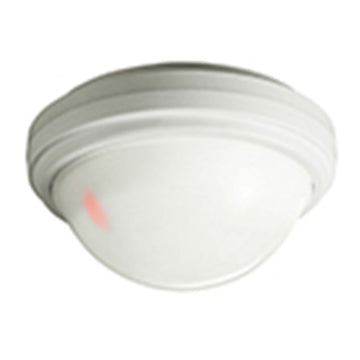
The LuNAR PIR Ceiling Detector is a digital ceiling mount detector with a slim housing, designed with state-of-the-art components to ensure reliable operation in a wide range of applications.
The LuNAR PIR employs a dual element PIR sensor with digital true temperature compensation, while a wide angle 110º Fresnel lens provides 360º coverage.


$595.00 NZD | $1,047.00 NZD


$115.25 NZD | $156.30 NZD

$150.63 NZD | $273.60 NZD



IP vs Cellular Alarm Monitoring: Why Dual-Path Communication Matters
Essential Security Supplies
An alarm panel can detect an intrusion and operate a local sounder while its monitoring connection is unavailable. For a commercial premises, that distinction matters: a successful local test does not prove that the monitoring centre received the correct event and can follow the agreed response procedure.
Read more
Alarm Panel Backup Batteries: Charger Limits, Standby Loads and Replacement
Essential Security Supplies
A larger battery does not automatically deliver a better alarm installation. The panel must support the battery chemistry and capacity, the charger must restore charge within the required period, and the wiring and enclosure must suit the installation. The system also has to operate correctly at the lower voltage available towards the end of a discharge.
Read more
Glass-Break vs Shock and Vibration Detectors: Which Protection Method Works Where?
Essential Security Supplies
A shopfront, office window and service door can present very different intrusion risks. An acoustic glass-break detector listens for a glass-breaking event. A shock or vibration detector monitors disturbance in the surface or structure where it is installed. Their purpose overlaps at the perimeter, but the event they measure and the way they are commissioned differ.
Read more
PIR vs Dual-Technology Detectors: Selection for Difficult Commercial Environments
Essential Security Supplies
A detector that works well in a quiet office can be a poor fit for a loading area with moving doors, changing temperatures and machinery. Choosing between PIR and dual-technology detection starts with understanding the intrusion route and the conditions that exist when the alarm is armed. Changing technology without addressing placement can leave the same problem in a different enclosure.
Read more